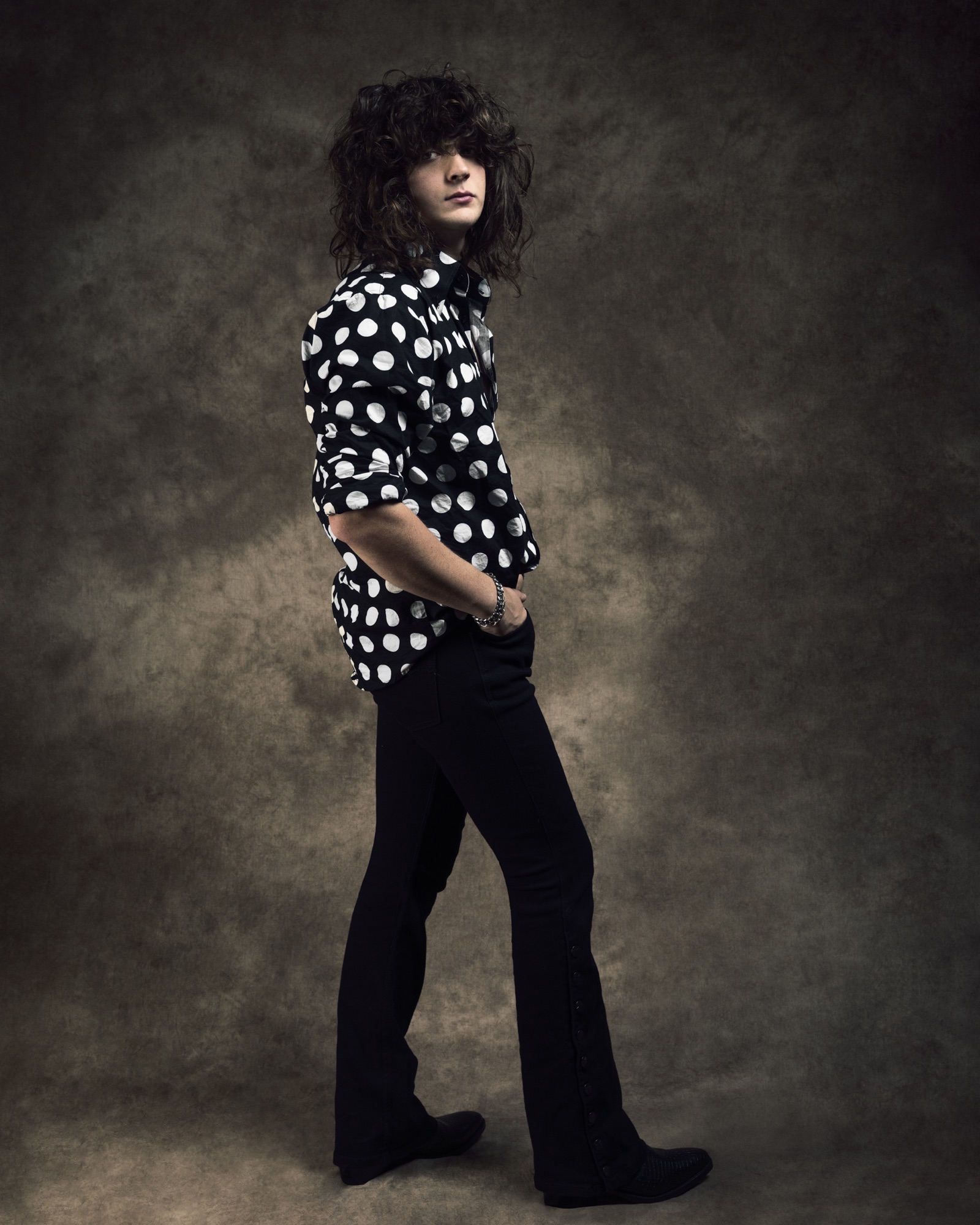
A release needs a small visual system.
One strong photograph is valuable. A connected set is more useful. Press, venues, streaming platforms, posters and social channels all need different shapes and amounts of negative space, so the session should create variations intentionally.
Begin with the key image.
The lead photograph should communicate the tone of the release quickly. It may become the primary press image, the top of a website or the visual attached to an announcement. Build the lighting, styling and location around the feeling the music is meant to create.
Capture more than one crop.
- A horizontal image with room for editorial layouts and text.
- A vertical portrait for posters, stories and press profiles.
- A tighter image that remains legible at thumbnail size.
- A full-length or wider environmental frame that establishes style and place.
Cropping one photograph into every format is possible, but it often weakens the composition. Making the formats during the shoot produces better options.
Show both identity and flexibility.
Wardrobe or lighting changes should feel like chapters of the same release rather than unrelated experiments. One setup can be direct and iconic; another can be looser, more environmental or more expressive. The visual thread should remain clear.
Plan for real-world delivery.
Final files should include high-resolution images for press and artwork, plus web-ready versions for quick use. Clear filenames, photographer credit and a concise selection make it easier for publicists, writers and venues to use the work correctly.